How I Found Calm and Strength Through Qigong—And Why It Might Change Your Life Too
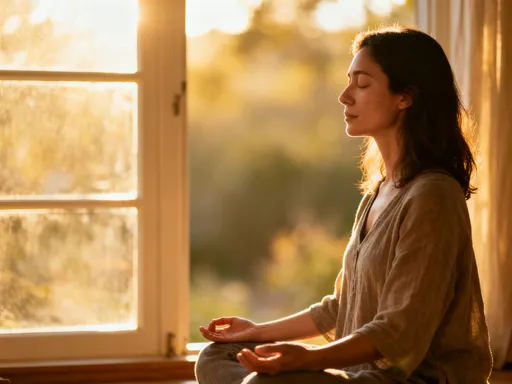
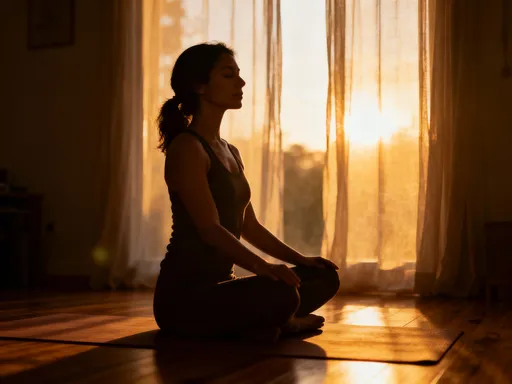
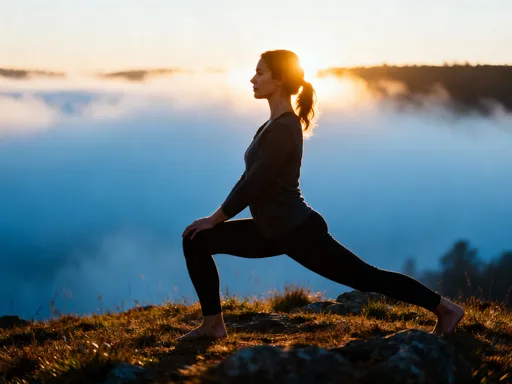
You’ve probably heard of yoga or meditation, but what about qigong? I was skeptical at first—just slow movements and breathing? Yet after weeks of practice, I noticed real shifts: better sleep, less tension, more energy. It’s not magic, but it feels close. Rooted in traditional Chinese wellness, qigong blends gentle motion with mindful breath. This is my journey—and how it can help you tap into natural vitality, one breath at a time. What began as a quiet experiment in my living room has grown into a cornerstone of my daily rhythm, offering not just physical ease but a deeper sense of balance. In a world that often feels too loud, too fast, and too demanding, qigong has become my anchor.
The Burnout That Led Me to Qigong
For years, I prided myself on being able to keep up. Juggling work, family, household responsibilities, and social obligations felt like a badge of honor. I believed that pushing through fatigue was strength. But slowly, the cost became impossible to ignore. Nights turned into restless cycles of checking the clock, my mind racing with unfinished tasks. Mornings arrived with a heaviness in my chest and a dull ache in my shoulders that no amount of stretching seemed to relieve. I was tired all the time, yet unable to truly rest.
The fatigue wasn’t just physical. Emotionally, I felt frayed. Small frustrations would flare into disproportionate reactions. I found myself snapping at my children over spilled milk or feeling overwhelmed by a simple grocery list. My energy reserves were depleted, and I had no idea how to refill them. Doctors ran tests and found nothing medically wrong, which was both a relief and a frustration. If there was no diagnosis, then why did I feel so broken?
I tried everything—vitamin supplements, sleep trackers, stricter diets, even cutting back on caffeine. Some helped slightly, but nothing addressed the root of the exhaustion. Then, one evening while searching for solutions online, I came across a video titled “Gentle Morning Qigong for Energy and Calm.” I paused. The woman on screen moved slowly, her arms rising and falling like waves. Her breathing was deep and rhythmic. It looked almost too simple. I remember thinking, “How could something so slow make a difference?” But desperation outweighed skepticism. I clicked play, stood up from the couch, and followed along. That ten-minute session didn’t transform me instantly, but for the first time in weeks, I felt a quiet stillness settle over me. It wasn’t excitement—it was relief.
What Exactly Is Qigong? (And Why It’s Not Just “Slow Exercise”)
Qigong (pronounced “chee-gong”) is a mind-body practice with roots in traditional Chinese health philosophy, developed over thousands of years. At its core, qigong is about cultivating and balancing Qi—a term often translated as “life energy” or “vital force.” Unlike high-intensity workouts that focus on building muscle or endurance, qigong emphasizes harmony, awareness, and the smooth flow of internal energy. It is not about performance, competition, or achieving a certain physical appearance. Instead, it is a practice of presence and integration.
The word “qigong” itself is made up of two parts: “qi” meaning energy, and “gong” meaning skill or practice. So, qigong literally means “energy practice.” This practice combines three essential elements: coordinated breathing, gentle physical movement, and focused intention. These components work together to support the body’s natural ability to self-regulate and restore balance. Movements are slow, deliberate, and often repeated, allowing the mind to stay engaged and the body to move without strain.
It’s easy to mistake qigong for tai chi, and while the two share similarities—both involve flowing motions and breath awareness—they are distinct. Tai chi evolved as a martial art and often includes more complex sequences, while qigong is typically simpler and more accessible, especially for beginners. Similarly, while qigong shares mindfulness elements with yoga, it does not rely on postures or flexibility. Instead, it focuses on internal awareness and the cultivation of energy through rhythm and repetition. This makes it uniquely suited for people of all ages and fitness levels, including those with limited mobility or chronic discomfort.
One of the most important shifts in understanding qigong is letting go of the idea that more effort equals better results. In our culture, we are conditioned to believe that progress comes from pushing harder, doing more, and moving faster. Qigong teaches the opposite: that stillness, slowness, and attention can be powerful forms of action. It is not about fixing the body through force, but about inviting it into a state of ease through gentle guidance.
Why Movement Matters in Energy Healing
In traditional Chinese wellness systems, health is seen as a state of balanced energy flow. When Qi moves freely through the body’s pathways, known as meridians, we feel vitality, clarity, and resilience. But when that flow becomes blocked or stagnant—due to stress, inactivity, emotional strain, or poor posture—discomfort, fatigue, and imbalance can arise. Think of it like water in a river: when the current is smooth, the ecosystem thrives. But when the water slows or gets dammed, debris builds up, and the system becomes sluggish.
This is where movement comes in. Gentle physical motion acts like a soft current, helping to stir and circulate energy throughout the body. Unlike vigorous exercise, which can sometimes deplete energy reserves, qigong movements are designed to conserve and enhance Qi. They are not meant to tire the body, but to awaken it. By moving with awareness and breath, we signal to the nervous system that it is safe to relax, allowing the body to shift out of constant “fight-or-flight” mode and into a state of restoration.
Many people assume that rest means stillness—lying down, sitting quietly, or sleeping. And while these are important, true restoration also requires gentle activation. When we sit for long hours, whether at a desk or on the couch, our muscles stiffen, our circulation slows, and our energy can become trapped. Qigong counters this by introducing micro-movements that lubricate the joints, improve blood flow, and reconnect the mind and body. It is movement as medicine, not as punishment.
The beauty of this approach is that it meets you where you are. You don’t need to be flexible, strong, or athletic. You simply need to be willing to move with attention. Even the smallest shifts—a slow arm raise, a deep inhale, a gentle twist—can create ripples of change. Over time, these small actions help retrain the body to move with greater ease and the mind to settle into deeper calm. It’s not about achieving perfection in form, but about cultivating awareness in motion.
My First 7 Days: What Actually Changed
When I began qigong, I didn’t know what to expect. I committed to just ten minutes a day, using a beginner-friendly video I found online. The first day, I felt awkward. My arms felt stiff, my breath was shallow, and my mind kept wandering to my to-do list. I wondered if I was doing it “right.” But I reminded myself that this was an experiment, not a performance. I focused on following the instructor’s voice, matching my breath to the movements, and staying present.
By day three, something subtle shifted. I noticed that my breathing had deepened without me trying. Instead of the quick, chest-level breaths I usually took, I was inhaling more fully, feeling my belly expand. This wasn’t dramatic, but it was noticeable. I also found that I wasn’t rushing through the practice. I began to appreciate the slowness, the way each movement unfolded like a flower opening in the sun. There was no pressure to finish or achieve anything—just the simple act of being with myself.
On day five, I experienced my first moment of true calm in weeks. It happened during a simple exercise where I stood with my feet shoulder-width apart, arms rising slowly overhead as I inhaled, then lowering as I exhaled. Halfway through, I felt a warmth spread through my chest and shoulders. My usual tension seemed to soften, as if my body was finally allowing itself to release. I didn’t cry or have a breakthrough—I just felt lighter. That evening, I fell asleep faster than usual and woke up feeling more refreshed.
By the end of the week, the changes were still subtle, but they were real. My morning stiffness had decreased. I wasn’t as reactive to small stressors. I caught myself taking deeper breaths during the day, even when I wasn’t practicing. Most importantly, I began to look forward to my qigong time. It wasn’t another chore on my list—it was a gift I gave myself. I realized that healing doesn’t always come in grand gestures. Sometimes, it arrives in the quiet moments between breaths.
The Science Behind the Stillness
While qigong has ancient roots, modern science has begun to recognize the benefits of mind-body practices like it. Research in the field of integrative health shows that activities combining movement, breath, and mindfulness can positively influence the nervous system. One of the most consistent findings is the activation of the parasympathetic nervous system—the part responsible for “rest and digest” functions. When this system is engaged, heart rate slows, muscles relax, and the body enters a state conducive to healing and recovery.
Chronic stress keeps the sympathetic nervous system—the “fight-or-flight” response—in overdrive. This leads to elevated levels of cortisol, the so-called “stress hormone,” which, when sustained, can disrupt sleep, weaken immunity, and contribute to fatigue. Mind-body practices like qigong help counter this by promoting relaxation and reducing cortisol production. While no single study can prove qigong “cures” any condition, the cumulative evidence suggests it supports the body’s natural ability to regain balance.
Another area of interest is heart rate variability (HRV), a measure of the variation in time between heartbeats. Higher HRV is associated with better cardiovascular health, emotional resilience, and adaptability to stress. Studies have shown that regular practice of slow, rhythmic breathing and gentle movement can improve HRV over time. This doesn’t mean qigong replaces medical care, but it can be a valuable complement to a healthy lifestyle.
What makes qigong particularly effective is its emphasis on consistency over intensity. Unlike high-impact workouts that can be hard to sustain, qigong is accessible and sustainable. You don’t need special equipment, a lot of space, or even perfect health to begin. The benefits come not from pushing harder, but from showing up regularly, even for just a few minutes a day. Over time, these small moments accumulate into lasting change. The science supports what practitioners have known for centuries: that how we move and breathe matters deeply to our well-being.
Simple Moves That Made a Difference
Three foundational qigong exercises became the core of my daily practice. Each one is simple to learn, requires no equipment, and can be done in a small space. I started with just five minutes a day, gradually increasing as I became more comfortable. These movements are not about intensity or speed—they are about connection, rhythm, and intention.
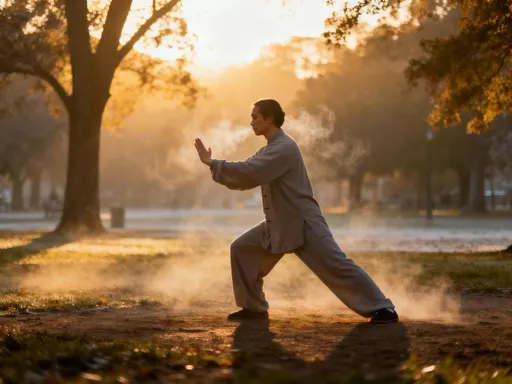
The first is called Lifting the Sky. Stand with your feet shoulder-width apart, knees slightly bent. Inhale slowly as you raise your arms in front of you, then overhead, palms facing up as if cradling the sky. Imagine drawing energy up from the earth through your feet and into your hands. Exhale as you lower your arms back down, palms turning down as if gently pressing energy into the ground. Repeat for several breaths. This movement encourages full, diaphragmatic breathing, stretches the spine gently, and promotes a sense of openness in the chest and shoulders.
The second is Separating Heaven and Earth. Begin in the same stance. Inhale as you raise your left hand overhead, palm up, while lowering your right hand toward the floor, palm down. Imagine a connection between your hands, as if you are holding a large ball of energy. Exhale as you switch sides: right hand rises, left hand lowers. This movement improves coordination, enhances balance, and helps align the body’s energy flow. It also gently engages the core and improves posture.
The third is Bear Swings, a gentle rocking motion that helps release tension in the lower back and hips. Stand with feet slightly wider than hip-width, knees soft. Let your arms hang loosely. Inhale as you shift your weight onto your right foot, allowing your torso to lean slightly to the right and your arms to swing gently to the left. Exhale as you shift to the left, arms swinging right. Keep the movement small and fluid, like a tree swaying in the breeze. This exercise promotes grounding, improves circulation, and helps release stored tension in the pelvis and lower spine.
These three exercises take less than ten minutes to complete, yet they have had a profound impact on my daily well-being. I often do them in the morning to set a calm tone for the day, or in the evening to unwind. The key is not perfection, but presence. Even on days when I feel stiff or distracted, simply going through the motions helps me reconnect with my body and breath.
Building a Routine That Sticks
One of the biggest challenges in starting any new habit is consistency. I quickly learned that waiting for the “perfect moment” to practice meant it would never happen. Instead, I had to make qigong fit into my real life. I started by choosing a consistent time each day—first thing in the morning, before the household woke up. This became my sacred window, just ten minutes where I could focus on myself.
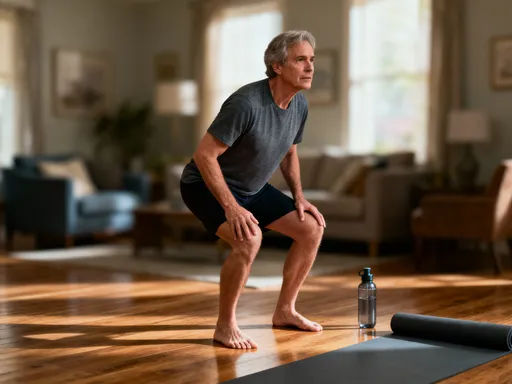
I also made small environmental changes to support the habit. I kept a pair of comfortable clothes by my bed so I could practice in pajamas if needed. I found a quiet corner of the living room and cleared space for movement. I downloaded a few audio-guided sessions so I didn’t have to rely on video every time. These small adjustments removed friction and made it easier to show up, even on busy or stressful days.
Another key was tracking subtle changes. Instead of waiting for dramatic results, I paid attention to small wins: a deeper breath, less shoulder tension, a moment of calm before reacting to a challenge. I didn’t measure progress by how long I practiced, but by how I felt afterward. This helped me stay motivated, even when life got hectic.
I also learned to be patient with myself. There were days when I skipped practice, or when my mind raced the entire time. Instead of judging myself, I treated these moments with kindness. I reminded myself that qigong is a practice, not a performance. Over time, it became less of a “should” and more of a “want.” I began to miss it on the days I didn’t do it. Now, it’s as natural as brushing my teeth—a non-negotiable part of my self-care.
Why This Isn’t a Quick Fix—But a Lifelong Practice
Qigong didn’t solve all my problems overnight. It didn’t erase stress or eliminate challenges. But it gave me a tool to meet life with greater resilience. Over months of consistent practice, I noticed deeper shifts: I became more aware of my body’s signals, more attuned to my emotions, and better able to pause before reacting. I didn’t just feel calmer—I felt stronger, not in a physical sense, but in my ability to stay centered amidst chaos.
What I’ve come to understand is that qigong is not a cure, but a companion. It doesn’t promise to fix everything, but it offers a way to care for yourself with gentleness and intention. It teaches that healing is not always about doing more, but about being present. It reminds us that our bodies are not machines to be pushed, but living systems that thrive on balance, rhythm, and care.
For anyone feeling overwhelmed, exhausted, or disconnected, I encourage you to consider giving qigong a try. Start small. Be patient. Allow yourself to move slowly, breathe deeply, and simply be. You don’t need special skills or equipment. You just need a few minutes and a willingness to listen to your body. And always, consult with a healthcare professional if you have medical concerns—qigong is a supportive practice, not a substitute for medical treatment.
In the end, this journey has taught me that true strength isn’t found in pushing through, but in knowing when to slow down. Qigong has given me a quiet power—one breath, one movement, one moment at a time. And if it can help me, it might just help you too.