St. Petersburg Unfiltered: What You Actually Need to See
Walking through St. Petersburg feels like stepping into a living museum—golden domes glow in the sunlight, canals weave through historic streets, and art spills out of palaces and into public squares. I didn’t expect to be so moved by the city’s quiet grandeur. This isn’t just a list of sights—it’s about what truly matters when you’re there, on the ground, soaking it all in. Let’s talk about the views that take your breath away and the spots most travelers miss. From imperial palaces to hidden gardens, from river cruises under the midnight sun to intimate galleries pulsing with creativity, this guide cuts through the noise to deliver what you actually need to see, feel, and experience in one of Europe’s most captivating cities.
The Heartbeat of the City: Palace Square and the Winter Palace
The Winter Palace stands as a crown jewel of St. Petersburg’s skyline, its pale green and white façade stretching across Palace Square like a painted dream. Built in the 18th century as the official residence of the Russian tsars, it now houses the Hermitage Museum—one of the largest and most important art collections in the world. More than just an architectural marvel, the palace is a living chronicle of imperial ambition, artistic patronage, and historical upheaval. Standing before it at sunrise, when the morning light catches the golden Corinthian columns and the Neva River mirrors its reflection, offers a moment of awe few cityscapes can match.
Inside, the Hermitage spans over 1,000 rooms and contains more than three million works of art. To navigate it without feeling overwhelmed, a strategic approach is essential. Start early in the day—ideally right at opening—and focus on key highlights rather than attempting to see everything. The Jordan Staircase, once used for royal ceremonies, sets the tone with its grandeur: marble balustrades, gilded stucco, and ceilings adorned with allegorical frescoes. Walking up these steps, you can almost hear the echo of courtly processions and feel the weight of history beneath your feet.
Among the must-see galleries are the ones housing masterpieces by Rembrandt, Leonardo da Vinci, and Michelangelo. The Peacock Clock in the Pavilion Hall is a marvel of 18th-century engineering, still functioning with intricate mechanical precision. To make the most of your visit, book skip-the-line tickets online in advance. This not only saves time but also allows you to bypass long queues that form by mid-morning, especially during peak tourist seasons. Consider renting an audio guide or downloading the official Hermitage app, which offers curated tours by theme, era, or artist.
For visitors with limited time, a two- to three-hour focused visit is more rewarding than a rushed full-day tour. Prioritize the Old Masters, the Impressionist collection, and the Egyptian antiquities. Families may appreciate the interactive children’s tour available on weekends. Meanwhile, those with mobility concerns should note that while elevators are available, some wings involve stairs and long corridors. The museum is vast, but with planning, it becomes not a burden but a journey through centuries of human creativity.
Churches That Touch the Sky: St. Isaac’s and the Cathedral of the Savior on Spilled Blood
Two of St. Petersburg’s most iconic religious sites—St. Isaac’s Cathedral and the Church of the Savior on Spilled Blood—offer not only spiritual resonance but also architectural splendor. Though both were built as Orthodox churches, their purposes and atmospheres differ, providing complementary experiences for travelers. St. Isaac’s, completed in 1858, was once the largest cathedral in Russia and remains a masterpiece of neoclassical design. Its gilded dome, visible from nearly every corner of the city center, is covered in 100 kilograms of gold and rises 101 meters above the ground.
One of the most rewarding experiences here is ascending to the colonnade, a circular walkway encircling the base of the dome. The climb involves 262 steps, but the panoramic view of the city is well worth the effort. From this vantage point, you can see the golden spire of the Admiralty, the winding Neva River, and the red-brick rooftops of the historic district stretching into the distance. On a clear day, the vista extends for miles, offering a bird’s-eye understanding of how the city unfolds across its waterways and islands.
Inside, the cathedral is a feast for the eyes: columns of semiprecious malachite and lapis lazuli, intricate mosaics, and frescoes depicting biblical scenes in vivid color. Unlike many churches in Russia, St. Isaac’s functions primarily as a museum today, allowing for quiet contemplation without the constraints of religious services. Photography is permitted, though flash is discouraged. Dress modestly out of respect—shoulders and knees should be covered—and be mindful of the no-shoes policy on certain marble sections during summer months.
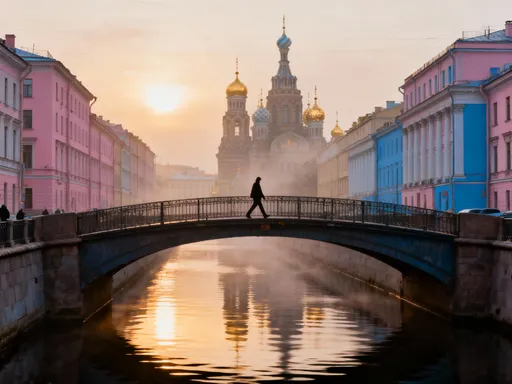
In contrast, the Church of the Savior on Spilled Blood is a celebration of Russian revival architecture. Built on the site where Emperor Alexander II was assassinated in 1881, it combines Byzantine and traditional Russian elements, with colorful onion domes and elaborate exterior tilework. Inside, the effect is even more breathtaking: every surface, from floor to ceiling, is covered in mosaics. Over 7,500 square meters of intricate glass and stone tesserae depict saints, angels, and scriptural scenes in astonishing detail. The sheer density of imagery can be overwhelming, but taking time to observe individual panels reveals craftsmanship that took over 30 years to complete.
While both churches are popular with tourists, visiting early in the morning or late in the afternoon helps avoid the busiest hours. St. Isaac’s closes earlier—usually by 6 PM—while the Savior on Spilled Blood often remains open until 7 PM, making it a good option for an evening visit. Accessibility remains a challenge at both sites due to stairs and narrow passages, but guided wheelchair-accessible tours can be arranged in advance. For those seeking a moment of peace, sitting quietly in either space offers a rare chance to reflect amidst the city’s grandeur.
Floating Beauty: Exploring the Canals and Neva River
St. Petersburg’s identity is inseparable from its waterways. Built on a delta of over 40 islands, the city is laced with canals, embankments, and bridges, earning it the nickname “Venice of the North.” Experiencing the city from the water offers a completely different perspective—one of graceful silhouettes, rippling reflections, and the gentle hum of boat engines beneath the summer sky. A river cruise is not just a sightseeing activity; it’s a sensory immersion into the city’s rhythm and design.
Short sightseeing cruises, typically lasting 60 to 90 minutes, are ideal for first-time visitors. They cover major landmarks: the Peter and Paul Fortress, the Spit of Vasilievsky Island, the Winter Palace embankment, and the Church of the Savior on Spilled Blood. These tours often include multilingual commentary, providing historical context and fun anecdotes about the buildings along the shore. For a more intimate experience, opt for a smaller boat with open decks, which allow for unobstructed photography and fresh air.
For a truly magical experience, consider an evening cruise during the White Nights—late May to mid-July—when the sun barely sets and the sky glows with soft pink and gold hues. The drawbridges over the Neva River are raised each night to allow large ships to pass, a spectacle that draws crowds to the embankments. Watching a bridge slowly split apart, its central span lifting into the air like a mechanical ballet, is a highlight few forget. Evening tours timed around bridge openings often include light music and onboard refreshments, enhancing the romantic atmosphere.
Longer dinner cruises, lasting two to three hours, combine dining with sightseeing. These are perfect for travelers seeking a relaxed, elegant evening. Menus typically feature Russian classics like borscht, pelmeni, and blini, paired with local wines or champagne. While more expensive, they offer excellent value for special occasions. When choosing a cruise, verify the operator’s safety record and check recent reviews for comfort and service quality.
Boat tours operate seasonally, generally from May through September, when the rivers are ice-free. Winter cruises are rare due to freezing conditions, though some companies offer icebreaker excursions for adventurous travelers. Regardless of season, dressing in layers is wise—temperatures on the water can be significantly cooler than on land. And while enclosed boats offer shelter, open-deck vessels provide the best photo opportunities, especially at golden hour.
Hidden in Plain Sight: Less-Known Parks and Garden Escapes
Amid the grandeur of palaces and museums, St. Petersburg’s green spaces offer quiet refuges where travelers can pause, breathe, and reconnect with nature. While the Summer Garden and Mikhailovsky Garden are well-known, they remain underappreciated by many tourists who rush from monument to monument. These parks, originally designed for royalty, blend formal European landscaping with romantic Russian sensibilities, creating serene environments perfect for reflection or a leisurely stroll.
The Summer Garden, founded by Peter the Great in the early 18th century, is a masterpiece of symmetry and elegance. Lined with statues of classical deities, fountains, and neatly trimmed hedges, it reflects the tsar’s vision of a modern, European-style capital. In spring, lilacs bloom in purple waves, filling the air with fragrance. Summer brings roses and linden trees in full leaf, casting dappled shade over stone pathways. Early mornings are ideal for visiting—before the crowds arrive, the garden feels almost private, with only the sound of rustling leaves and distant birdsong.
Nearby, the Mikhailovsky Garden offers a more relaxed atmosphere. Once part of the imperial estate, it now surrounds the Russian Museum and features open lawns, a small pond, and shaded walkways. Benches tucked beneath trees invite quiet reading or conversation. A charming café near the main entrance serves coffee, pastries, and light meals, making it a perfect spot for a midday break. Families appreciate the children’s play area, while photographers find endless compositions in the interplay of light, water, and greenery.
Other lesser-known green spaces include the Field of Mars, a large open park near the Marble Palace, and the Botanical Garden of the Komarov Institute, which boasts over 7,000 plant species. These areas attract mostly locals, offering an authentic slice of daily life. Visiting during lunchtime or late afternoon reveals people walking dogs, reading books, or simply sitting on benches enjoying the sun. To avoid midday heat in summer, plan garden visits for early morning or late evening. Wear comfortable shoes, bring water, and consider packing a light picnic—many parks have designated areas for eating outdoors.
Art Beyond the Hermitage: Smaller Galleries Worth Your Time
While the Hermitage Museum is a cornerstone of any visit, St. Petersburg’s artistic soul extends far beyond its walls. Smaller galleries offer intimate, crowd-free experiences that allow for deeper engagement with Russian art and culture. The Russian Museum, located in the Mikhailovsky Palace, is the most significant of these. Dedicated exclusively to Russian artists, it traces the evolution of national art from medieval icons to 20th-century avant-garde.
The museum’s collection includes works by Ilya Repin, whose dramatic historical paintings capture pivotal moments in Russian life, and Kazimir Malevich, pioneer of Suprematism. Unlike the Hermitage, which spans global art, the Russian Museum focuses on the emotional and spiritual currents that shaped Russian identity. Its galleries are thoughtfully arranged, guiding visitors through centuries of change, from religious devotion to revolutionary experimentation.
Another gem is Erarta Museum of Contemporary Art, the largest private museum of its kind in Russia. Housed in a modern building on Vasilievsky Island, it showcases works by living Russian artists across painting, sculpture, video, and installation. The tone is bold and sometimes provocative, reflecting modern social issues, personal identity, and abstract expression. Interactive exhibits and guided tours enhance understanding, especially for those unfamiliar with contemporary art. Audio guides are available in multiple languages, and the museum café offers panoramic city views.
For a more niche experience, consider the Fabergé Museum in the Shuvalov Palace, which houses the largest collection of Fabergé eggs outside the Kremlin. Each jeweled creation, crafted for the Romanov family, is a testament to craftsmanship and imperial luxury. Due to its size and popularity, booking tickets online is recommended. These smaller institutions, while less famous, often provide more meaningful connections to art because they allow time and space for contemplation—something increasingly rare in today’s fast-paced travel culture.
Getting Around Like a Pro: Metro, Taxis, and Walking Tips
Navigating St. Petersburg is both practical and pleasurable. The city’s metro system is not only efficient but also an attraction in itself. Known for its depth—some stations are over 60 meters underground—it was originally designed as a bomb shelter during the Cold War. Today, it serves millions daily, connecting major tourist sites with speed and reliability. Stations like Admiralteyskaya, Avtovo, and Kirovsky Zavod are adorned with chandeliers, marble columns, and mosaic murals, making the commute feel like a journey through an underground palace.
To use the metro, purchase a transport card (called a “podorozhnik”) at any station kiosk. It can be loaded with rides or time-based passes and works across buses, trams, and the metro. Signs are in Cyrillic, but most stations have Latin transliterations, and digital maps are available at entrances. Downloading the Yandex.Metro app before arrival provides real-time schedules and route planning. Trains run from 5:40 AM to 1:00 AM, with frequencies of 2–3 minutes during peak hours.
Taxis offer a convenient alternative, especially for late-night travel or when carrying luggage. The safest and most reliable option is Yandex.Taxi, the Russian equivalent of Uber. The app allows you to see driver details, car type, and fare estimates before booking. Rides within the city center typically cost between 200 and 500 rubles, depending on distance and traffic. Always confirm the driver’s name and license plate before entering the vehicle.
Walking is one of the best ways to experience St. Petersburg, particularly in the central districts where attractions are clustered. The area between Palace Square, Nevsky Prospekt, and the Fontanka River is highly walkable, with wide sidewalks and scenic routes along canals. Comfortable, waterproof shoes are essential—cobblestone streets can be uneven, and summer rains are frequent. Downloading offline maps via Google Maps or Maps.me ensures navigation even in areas with poor signal, especially in the deep metro stations. Carrying a small umbrella or lightweight raincoat is also wise, as sudden showers are common.
When to Go and What to Pack: Seasonal Insights for the Smart Traveler
Choosing the right time to visit St. Petersburg can transform your experience. Each season offers distinct advantages and challenges. Summer, particularly June and July, is the most popular period. This is when the White Nights occur—nights so bright that true darkness never falls. The city pulses with energy: open-air concerts, festivals, and extended museum hours create a festive atmosphere. However, this also means larger crowds, higher prices, and the need for advance bookings for hotels and tours.
Winter, from December to February, brings a different kind of magic. Snow blankets the city, turning palaces and parks into postcard-perfect scenes. Fewer tourists mean shorter lines and a more peaceful experience. Temperatures can drop below -10°C (14°F), so packing warm layers, a heavy coat, insulated boots, and gloves is essential. Despite the cold, indoor attractions remain inviting, and the holiday lights along Nevsky Prospekt add warmth to the season.
Spring and autumn are shoulder seasons, offering a balance between weather and crowd levels. May brings blooming flowers and milder temperatures, while September offers golden foliage and fewer visitors. These months are ideal for travelers who prefer a quieter pace. However, be prepared for unpredictable weather—rain is common, and temperatures can fluctuate.
Packing smart is key. Regardless of season, bring comfortable walking shoes, a reusable water bottle, and a compact daybag. In summer, include sunscreen, sunglasses, and a hat. In winter, thermal underwear, a scarf, and a hat are non-negotiable. Always carry a universal power adapter, as Russian outlets use Type C and F plugs. For cultural sites, modest clothing is recommended—avoid shorts and sleeveless tops when visiting churches or museums.
Finally, consult the calendar for major events. The White Nights Festival in June features world-class ballet and opera performances. The Scarlet Sails celebration, tied to graduation season, includes a spectacular fireworks display over the Neva. Meanwhile, museums may close on Mondays or have reduced hours during holidays, so planning ahead ensures you don’t miss key attractions.
Conclusion
St. Petersburg isn’t just about checking off landmarks—it’s about feeling the weight of history, the glow of art, and the rhythm of a city built on water and ambition. With the right approach, your visit becomes more than a trip; it becomes a story worth telling. Choose wisely, move thoughtfully, and let the city reveal itself—one stunning view at a time. Whether you’re marveling at a Fabergé egg, gliding under a raised drawbridge, or sitting quietly in a sun-dappled garden, the moments that stay with you are the ones that engage not just your eyes, but your heart. Travel with intention, respect the culture, and allow space for discovery. In St. Petersburg, beauty is everywhere—but the true magic lies in how you experience it.